AAU Energy
Course in Introduction to Stability of Electric Power Systems
PhD course
Pontoppindanstræde 101, room 1.015, 9220 Aalborg East, Denmark
02.02.2026 08:30 - 04.02.2026 16:30
Registration deadline: 12.01.2026

English

On location
6000 DKK
PhD course
Pontoppindanstræde 101, room 1.015, 9220 Aalborg East, Denmark
02.02.2026 08:30 - 04.02.2026 16:30
Registration deadline: 12.01.2026
English - 6000 DKK
On location
AAU Energy
Course in Introduction to Stability of Electric Power Systems
PhD course
Pontoppindanstræde 101, room 1.015, 9220 Aalborg East, Denmark
02.02.2026 08:30 - 04.02.2026 16:30
Registration deadline: 12.01.2026
English
On location
6000 DKK
PhD course
Pontoppindanstræde 101, room 1.015, 9220 Aalborg East, Denmark
02.02.2026 08:30 - 04.02.2026 16:30
Registration deadline: 12.01.2026
English - 6000 DKK
On location
Course schedule
- Overview of power system stability and classification
- Basics of power system stability
- Concept and methodology of stability
- Small signal stability and large signal stability
- Power system angle stability
- Voltage stability and response dynamics
- Frequency stability and frequency regulation method
- Large signal stability and analysis method
- New emerging stability issues in inverter-fed power system – Part I
- New emerging stability issues in inverter-fed power system – Part II
- Machining learning-driven stability assessment
- Demonstration and practice in Digsilent or RTDS
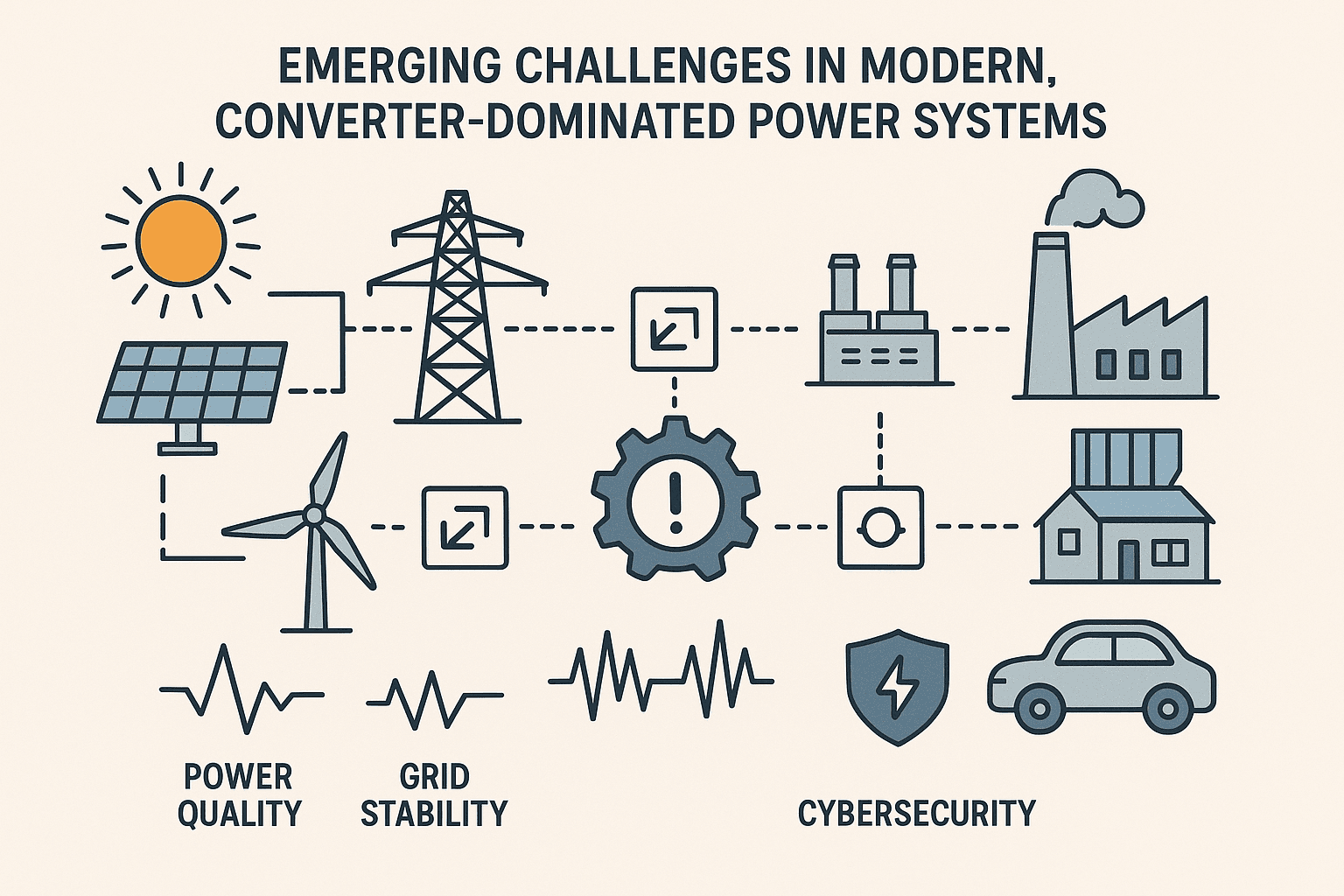
This course introduces PhD students to the theory and analysis of electric power system stability, with a focus on the emerging challenges in modern, converter-dominated power systems. As renewable energy sources and power electronics replace conventional synchronous machines, new forms of instability are arising. The course provides foundational knowledge in power system stability and modern perspectives, including small and large signal stability, sub-synchronous oscillations, and inverter-driven dynamics. The motivation stems from the need to understand how large-scale integration of renewable energy affects dynamic behavior and system stability. Selected topics reflect recent research and practical challenges in grid stability analysis and control.
Including learning objectives: By the end of the course, participants should be able to:
- Understand the classification and theory of power system stability
- Analyze frequency, angle, and voltage stability phenomena
- Distinguish between small-signal and large-signal stability methods
- Explain the influence of power electronic converters and inverter-based resources on system dynamics
- Apply simulation tools to assess and improve system stability
Important information concerning PhD courses
The Doctoral School has decided to introduce a no-show fee of DKK 3000 for each course where the student does not show up. Cancellations are accepted no later than 2 weeks before the start of the course. Registered illness is of course an acceptable reason for not showing up on those days. Furthermore, all courses open for registration approximately four months before start.
For inquiries regarding registration, cancellation or waiting list, please contact AAU Energy's administration at hr@energy.aau.dk