News
Demonstrating Large-Scale Sorption-Enhanced Ammonia – Key Lessons from the Team
Published online: 26.03.2026
News
Demonstrating Large-Scale Sorption-Enhanced Ammonia – Key Lessons from the Team
Published online: 26.03.2026
Demonstrating Large-Scale Sorption-Enhanced Ammonia – Key Lessons from the Team
News
Published online: 26.03.2026
News
Published online: 26.03.2026
HySTrAm represents the first European project to demonstrate sorption-enhanced ammonia synthesis at demonstrator scale. Coordinated by Assoc. Prof. Vincenzo Liso at AAU Energy, the project brought together industrial partners, research institutions, and innovation specialists from across Europe to validate a concept never before tested at this level of maturity.
The breakthrough lies in the process conditions. Operating at approximately 300°C and around 40 bar – lower than traditional Haber–Bosch synthesis – the system relies on a metal halide sorbent (MgCl₂) on alumina support and a ruthenium-based ammonia synthesis catalyst to maintain high ammonia conversion under these milder conditions.
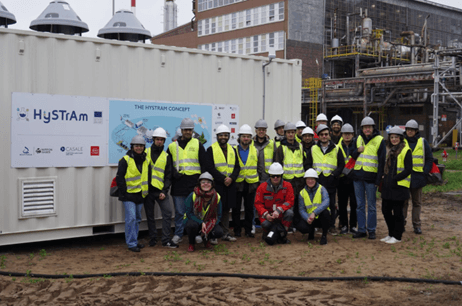
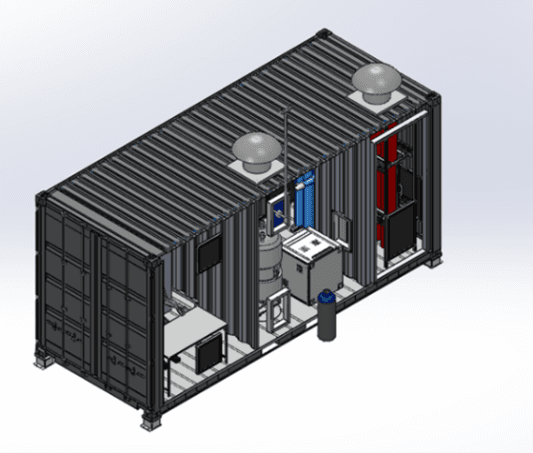
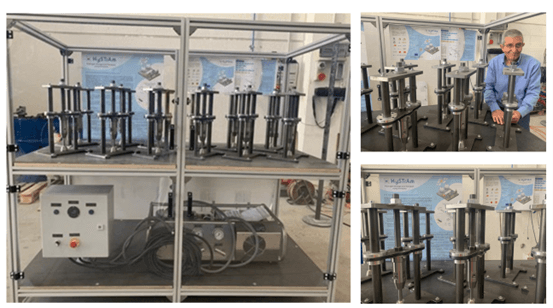
The demonstrator, engineered by Casale and HySystech and hosted at the Anwil site in Poland, reached Technology Readiness Level 5 and marked a milestone toward more flexible, energy-efficient ammonia production.
During the final test campaign, the plant successfully produced ammonia, which was subsequently absorbed and later desorbed in the sorbent bed. This approach significantly reduces the energy demand for ammonia separation, as it eliminates the need for energy-intensive chillers typically used in conventional Haber–Bosch systems.
The validated process therefore has important implications for integrating renewable hydrogen into Europe’s energy systems, offering a modular and energy-efficient platform that could transform how green ammonia and other e-fuels are produced.
The project also introduced several innovations, including a Metal Organic Framework (MOF) based hydrogen storage vessel and machine-learning-assisted design of new sorbent and catalyst materials, creating an integrated technology suite that extends beyond ammonia synthesis alone.
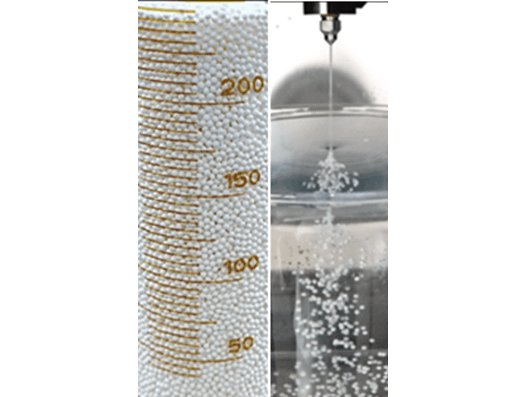
Strong interdisciplinary teamwork and a shared willingness to learn were key to solving complex challenges.
HySTrAm’s success fundamentally depended on collaboration across disciplines and borders, bringing together experts in catalysis, reactor engineering, dynamic modelling, materials science, digital twins, and industrial operations who had not previously worked together.
The integration of advanced materials, modelling tools, and demonstrations was only possible because each partner engaged openly, asked questions, and learned from one another.
This interdisciplinary setup created both opportunities and challenges. Progress required not just technical excellence but also trust and communication. Partners from universities, research and technology organisations, and industry aligned around shared goals, collectively addressing challenges such as material scale-up, system integration, and coordinating test campaigns under real industrial conditions.
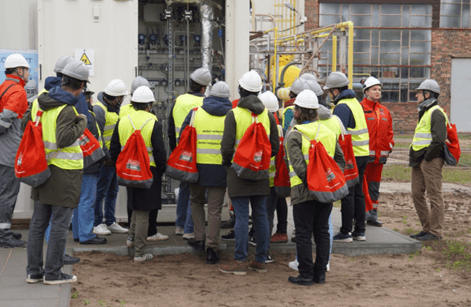
The Horizon Europe programme is unique in ensuring robust project management across countries, disciplines, and work packages, while establishing knowledge-sharing mechanisms including joint workshops, modelling exchanges, and cross-partner reviews.
Clear milestones and deliverables helped keep the consortium aligned and accountable, while the framework’s flexibility provided space for experimentation, allowing partners to refine their approaches as the pilot evolved.
Critically, the structure facilitated active engagement from all partners, from SMEs to large industrial players, building not just technical progress but also a shared understanding and common language across scientific fields.
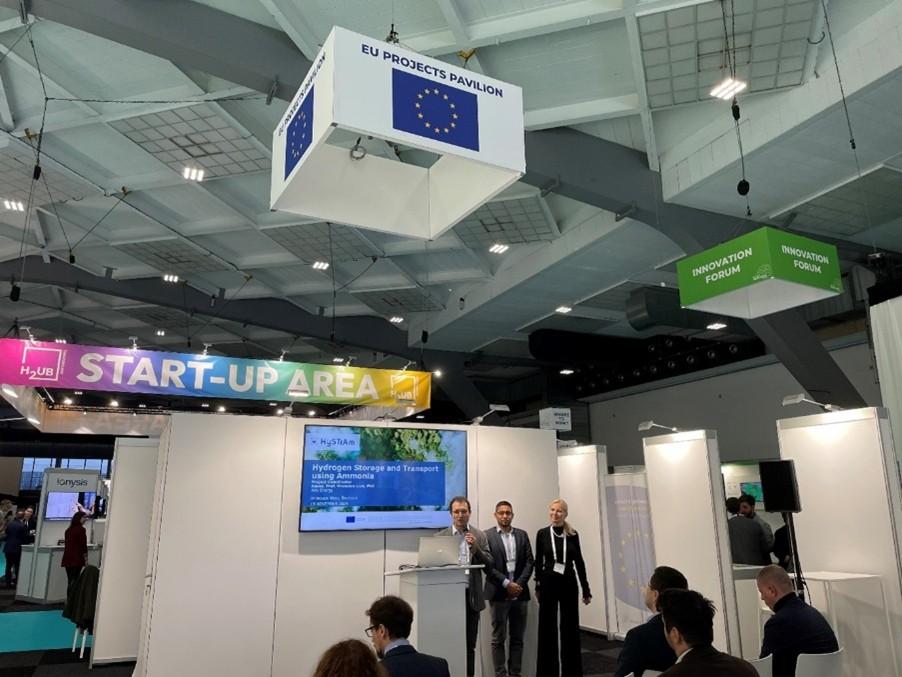
Beyond its technical achievements, HySTrAm leaves a lasting legacy: a model of European collaboration, scientific advancements including three PhD projects and several publications, and shared learning demonstrating how ambitious energy technologies can be matured through coordinated, cross-border efforts.
As Europe pursues its energy transition goals, the lessons learned in HySTrAm will prove valuable for all partners involved in this effort.
Acknowledgment
The HySTrAm project received funding from the European Union under Grant Agreement No. 101058643.
Project partners:
PNO Innovation; Kemijski Institut Slovenia; Hysytech Srl; Technische Universiteit Eindhoven; Technische Universität Berlin; VITO Belgium; Gas Vessel Production Proizvodnja in Inženirske Dejavnosti d.o.o.; Thyssenkrupp Industrial Solutions AG; ProfMOF AS; Fundación Tecnalia Research & Innovation; Paragon AE; University of Oslo; Anwil SA; Thyssenkrupp Uhde GmbH; Casale SA; Johnson Matthey Plc.